
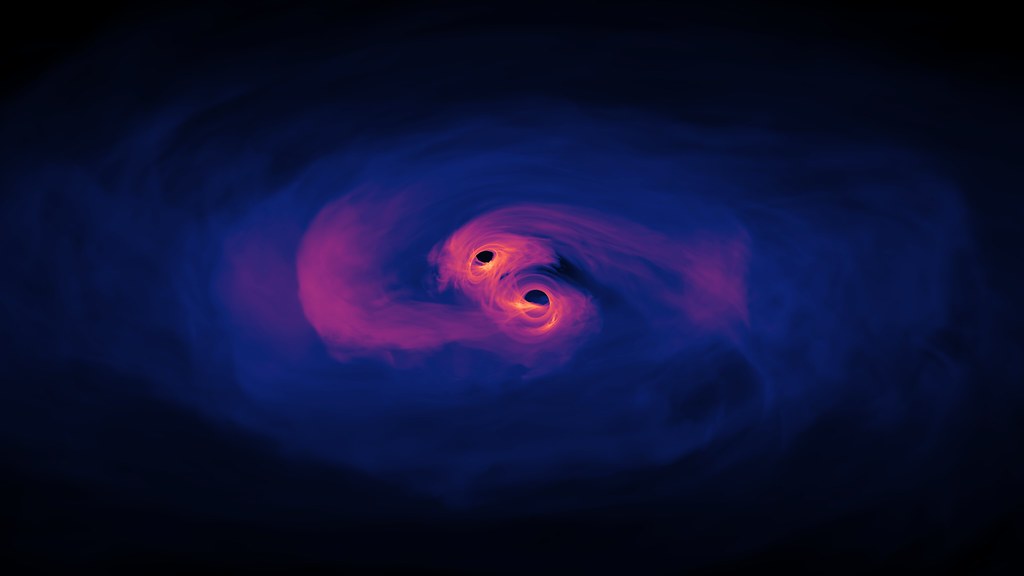
Supermassive black holes are now known to leave a glowing trail far beyond their host galaxies, shedding light on the mysteries of the universe.
What Are Supermassive Black Holes?
Supermassive black holes are colossal entities that reside at the centers of most galaxies, including our own Milky Way. These astronomical giants can have masses ranging from millions to billions of times that of our Sun. Their immense gravitational pull influences the motions of stars and gas in their vicinity, shaping the structure and evolution of galaxies.
Typically, supermassive black holes are surrounded by an accretion disk of gas and dust, which spirals inward at high velocities. As this material gets closer to the black hole, it heats up and emits powerful radiation, often making these regions some of the brightest in the universe. This radiant energy can have significant effects, including:
- Regulating star formation: The energy released can heat surrounding gas, preventing it from collapsing to form new stars.
- Influencing galaxy dynamics: The gravitational force of supermassive black holes can affect the orbits of nearby stars and gas clouds.
- Creating active galactic nuclei: In some cases, the activity around a supermassive black hole can outshine the entire galaxy.
Understanding these phenomena is essential for unraveling the complex relationship between supermassive black holes and their host galaxies.
The Discovery of Glowing Trails
Recent research has unveiled a fascinating phenomenon associated with supermassive black holes: the discovery of glowing trails that extend far beyond their host galaxies. These luminous trails are not merely eye-catching; they provide crucial insights into the behavior of black holes and their interactions with surrounding matter.
Scientists observed that as material falls into a supermassive black hole, it heats up and emits intense radiation. This process generates a glowing trail of ionized gas and dust, which can stretch for thousands of light-years. Such trails are often referred to as “jets” and can significantly influence the evolution of galaxies.
- Impact on Galaxy Formation: The energy from these jets can regulate star formation, either fueling new stars or suppressing their growth.
- Cosmic Significance: Understanding these glowing trails helps astronomers piece together the lifecycle of galaxies and the role of supermassive black holes in shaping the universe.
- Future Exploration: Ongoing studies aim to map these trails more precisely, providing deeper insights into their origins and effects.
Impact on Host Galaxies
The presence of supermassive black holes at the centers of galaxies significantly influences their structure and evolution. These colossal entities exert immense gravitational forces, shaping the surrounding environment in profound ways.
Research has shown that the effects of supermassive black holes extend well beyond their immediate vicinity. Some of the key impacts on host galaxies include:
- Star Formation Regulation: Supermassive black holes can suppress star formation by expelling gas and dust through powerful jets and winds, altering the rate at which new stars are born.
- Galaxy Mergers: They play a crucial role in galaxy mergers, as the gravitational pull of a supermassive black hole influences the dynamics of merging galaxies.
- Galactic Dynamics: The presence of these black holes affects the orbits of stars and other celestial bodies, leading to complex gravitational interactions that reshape galactic structures.
Understanding the relationship between supermassive black holes and their host galaxies is essential for grasping the broader dynamics of the universe.
How Black Holes Influence Surrounding Space
Supermassive black holes play a crucial role in shaping their surrounding environments. These immense gravitational giants, often found at the center of galaxies, exert significant influence on the formation and evolution of stars and gas within their host galaxies.
One of the primary ways supermassive black holes affect their surroundings is through powerful winds and jets. As matter spirals into the black hole, it heats up and generates enormous energy that can be released in the form of:
- Radiation: This can illuminate the space around them, making distant regions visible.
- Outflows: The energy can drive material away from the black hole, affecting star formation rates.
- Feedback mechanisms: These can regulate the growth of galaxies by heating or expelling gas necessary for star formation.
Ultimately, the presence of supermassive black holes not only influences their own host galaxies but also has far-reaching consequences that can extend to neighboring galaxies, illustrating their significant impact on the cosmic landscape.
Recent Research Findings
Recent studies have significantly advanced our understanding of the role of supermassive black holes in shaping their host galaxies. Researchers have discovered that these colossal entities are not just passive observers of cosmic evolution; rather, they actively influence their surroundings in remarkable ways.
One of the key findings is the identification of glowing trails extending far beyond the host galaxies, which are believed to be the result of interactions between supermassive black holes and their environment. These trails consist of gas and dust that are heated to extreme temperatures, emitting light that can be detected across vast distances.
Furthermore, scientists have noted that the gravitational pull of supermassive black holes can lead to the formation of new stars as gas is funneled towards the center of galaxies. This process not only impacts star formation rates but also affects the overall structure and evolution of galaxies over time.
As research continues, the intricate relationship between supermassive black holes and their host galaxies is becoming increasingly clear, revealing the profound impact these cosmic giants have on the universe.
Future Implications for Astronomy
The study of supermassive black holes could lead to groundbreaking advancements in our understanding of the universe. As astronomers delve deeper into the nature and behavior of these colossal entities, several future implications arise for the field of astronomy.
- Enhanced Cosmological Models: By refining our knowledge of supermassive black holes, scientists can improve models of galaxy formation and evolution, providing insight into how these giants interact with their environments.
- Gravitational Waves Detection: The merging of supermassive black holes is expected to produce gravitational waves, offering a new avenue for observing cosmic events and testing fundamental physics.
- Understanding Dark Matter: The study of supermassive black holes may help clarify the role of dark matter in the universe, as their gravitational influence can reveal the presence of unseen mass.
- Technological Advancements: The tools developed for studying supermassive black holes may lead to innovations in imaging and data analysis, impacting other fields of research.
As research continues, the implications of supermassive black holes will likely extend far beyond the realm of astronomy, reshaping our understanding of the cosmos.
Conclusion and Key Takeaways
In conclusion, supermassive black holes play a crucial role in the evolution and dynamics of their host galaxies. Their immense gravitational pull not only shapes the structure of galaxies but also influences the formation of stars and the distribution of matter in surrounding space.
Key takeaways from the recent findings include:
- Galactic Centers: Supermassive black holes are typically found at the centers of galaxies, serving as anchors around which stellar systems orbit.
- Trail of Influence: They emit energy that can extend far beyond their immediate vicinity, creating visible trails that impact intergalactic space.
- Continuous Research: Ongoing investigations are revealing more about their role in galaxy formation and evolution, enhancing our understanding of the universe.
- Future Exploration: As technology advances, astronomers are poised to uncover even more secrets about these enigmatic entities, paving the way for new discoveries in astrophysics.
Ultimately, the study of supermassive black holes remains vital for comprehending the broader cosmic landscape.
By NASA Goddard Photo and Video via Openverse




Leave a Reply